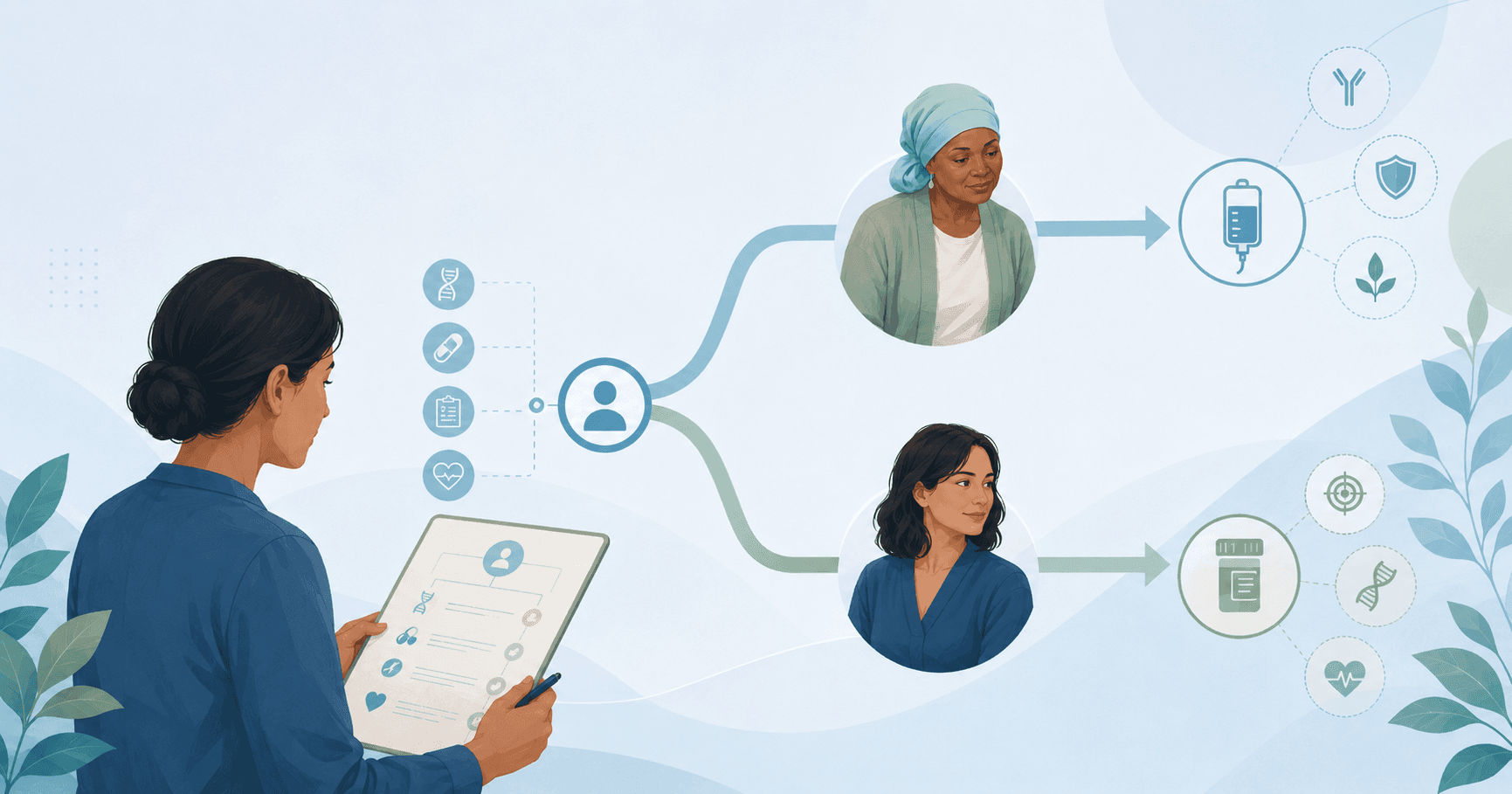

It often seems counterintuitive. Two patients receive the same diagnosis, yet their treatment options look completely different. One is offered a clinical trial, another is not. One is eligible for a targeted therapy, another is not. One hears about experimental options, another never does.
This variation is not random. It reflects how modern medicine actually works.
Diagnosis Is Only the Starting Point
In contemporary medicine, especially in oncology, diagnosis alone is no longer enough to determine treatment.
Patients with the same disease may differ in:
- genetic mutations and biomarker profiles
- prior treatments and response to therapy
- overall health and comorbidities
- disease progression patterns
These factors directly influence which therapies are considered appropriate. Many modern treatments are biomarker-driven, meaning therapy is selected based on molecular characteristics rather than the disease label alone.
Clinical Trial Eligibility Creates Additional Differences
Access to innovative therapies is often determined through clinical trials. Clinical trials are designed with strict eligibility criteria to ensure safety and generate reliable data. These criteria may include:
- specific genetic mutations
- number and type of prior treatments
- laboratory values within defined ranges
- absence of certain conditions
Even small differences can determine eligibility. Eligibility criteria remain one of the main reasons why many patients cannot participate in clinical trials, even when they have the same diagnosis.
Access Depends on Location and Infrastructure
Treatment options are not the same across all locations.
Availability depends on:
- whether a hospital runs specific clinical trials
- proximity to research centers
- national and institutional capabilities
Clinical trial participation remains low globally, partly due to limited access and geographic barriers. This means that treatment differences are often logistical, not purely medical.
The Physician Factor Influences What Is Offered
Treatment pathways are also shaped by the treating physician.
Different doctors may:
- have different levels of experience with clinical trials
- be connected to different research networks
- interpret emerging data differently
In many systems, access to experimental treatment starts with the physician. If a specific option is not identified or discussed, it may never become part of the patient’s treatment plan.
Real-World Constraints Shape Decisions
Even when multiple options exist, they are not always equally feasible.
Decisions are influenced by:
- time required to start treatment
- travel and logistics
- financial considerations
- patient condition and urgency
Treatment choices are not driven by clinical evidence alone. Practical constraints such as accessibility and effort play a significant role in what patients ultimately pursue.
Information Gaps Still Limit Access
Another key issue is visibility.
Patients are not always aware of:
- available clinical trials
- alternative treatment pathways
- differences in eligibility across studies
Patients should be considered for clinical trials whenever possible, yet in practice, gaps in awareness and communication remain a major barrier.
Why This Matters
Understanding this changes how treatment decisions are interpreted.
If two patients receive different options, it does not necessarily mean:
- one is receiving better care
- the other has no alternatives
It often means that:
- different biological factors are at play
- access pathways differ
- information and networks are not the same
What Patients and Caregivers Can Do
The goal is not to question every decision, but to expand the conversation.
It helps to ask:
- Are there clinical trials that could be relevant
- If I am not eligible for one study, are there others
- Would a second opinion provide additional options
In modern medicine, one opinion is often not the full picture.
Final Thought
Patients with the same diagnosis can have very different treatment journeys. Because treatment is no longer defined by diagnosis alone. It is shaped by biology, eligibility, access, and the structure of the healthcare system.
Understanding this does not eliminate the differences. But it helps explain them and, more importantly, helps patients and caregivers ask better questions that can open new options.