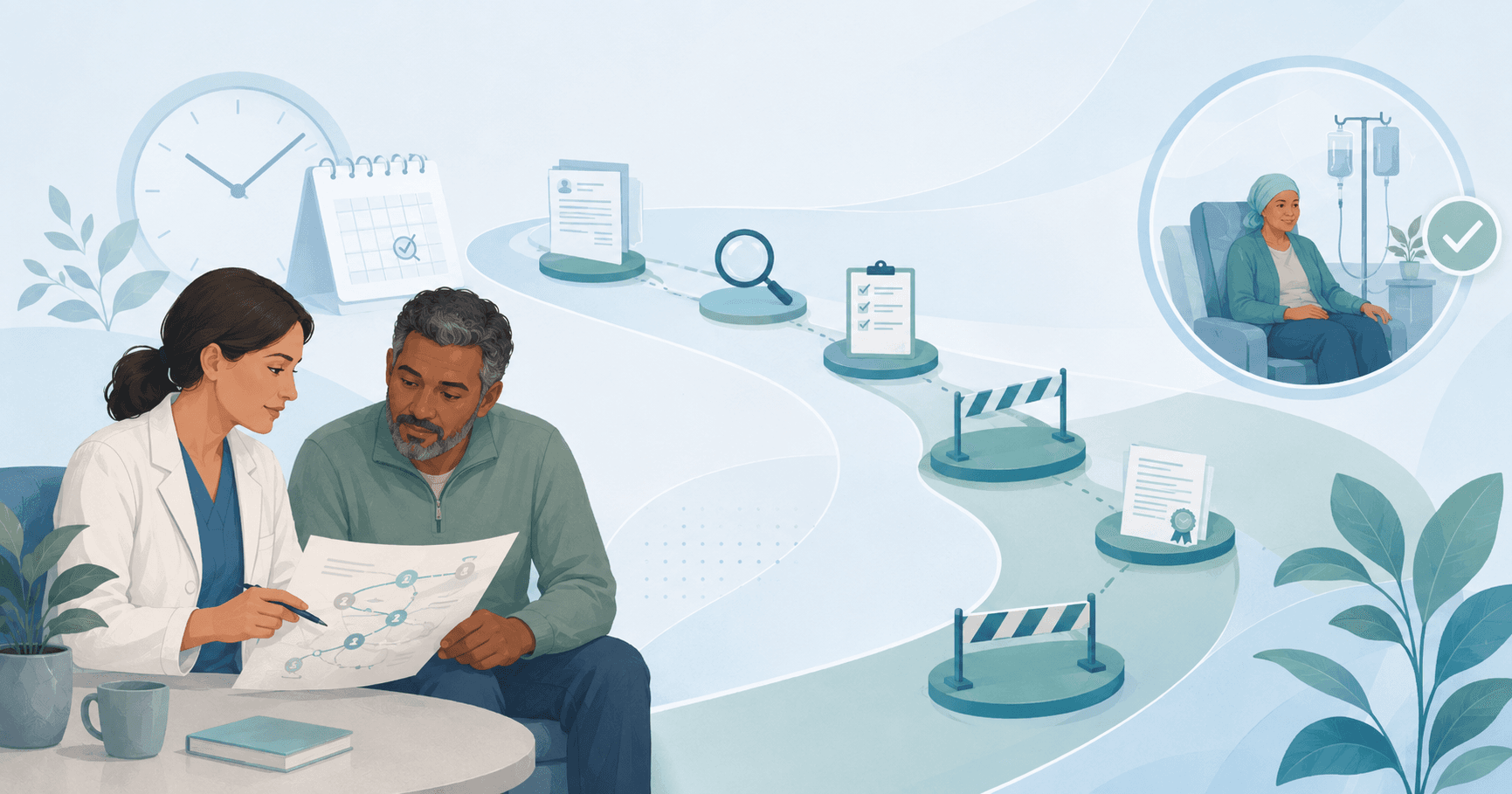

Being rejected from a clinical trial can feel like a major setback, especially if you were hoping it would give you access to a new treatment.
Many patients search for answers after hearing: “You are not eligible for this clinical trial.”
But what does that actually mean? And does it mean you have no options left?
The short answer is no. Clinical trial rejection is common and often misunderstood.
Why You Are Not Eligible for a Clinical Trial
Clinical trials are designed with strict eligibility criteria. These rules define who can safely participate and help researchers generate reliable data.
You may be considered not eligible for a clinical trial due to:
- prior treatments that affect results
- disease stage outside the study scope
- lab values outside required ranges
- additional health conditions
- genetic or molecular differences
Even small factors can lead to exclusion.
Recent research confirms that eligibility criteria are one of the most restrictive elements of clinical trials. Experts also note that many criteria are more restrictive than necessary, which limits access for patients.
Importantly, studies show that patients with common real world conditions such as comorbidities or prior treatments are often excluded, even though they represent the majority of people living with cancer. This creates a gap between clinical trial populations and real patients in everyday practice.
This means that you may be excluded not because a treatment will not work for you, but because the study is designed for a narrower population.
Clinical Trial Eligibility Is a System Level Barrier
Modern research shows that clinical trial eligibility itself is a major barrier to access.
Restrictive criteria can:
- reduce patient enrollment
- exclude real world populations
- limit diversity in trials
A recent analysis found that broadening eligibility criteria could significantly increase the number of patients who qualify. This highlights an important reality: many patients are excluded not by medicine, but by system design.
Why Many Patients Do Not Get Access to Clinical Trials
Eligibility is only part of the story. Access to clinical trials is influenced by multiple factors.
- Limited availability of trials
Not every hospital offers the same studies. Access often depends on location.
- Site and resource constraints
Hospitals may not run trials due to limited staff, infrastructure, or funding.
- Enrollment challenges
Even when patients qualify, participation remains low due to systemic barriers.
- Awareness and communication
Some patients are never informed about trials, or do not fully understand their options.
Trust, communication, and clarity all play a major role in access.
Why This Matters for Cancer Patients
For oncology patients, these barriers are especially important.
Clinical trials are often highly selective and focus on specific disease types and treatment histories. This creates a gap between patients who need options and those who meet strict criteria. As a result, many patients are excluded even when new therapies exist.
What to Do If You Are Rejected From a Clinical Trial
If you were told you are not eligible for a clinical trial, it is important to treat this as information, not a final decision.
- Understand the reason
Eligibility criteria vary across studies. What excludes you from one trial may not apply to another.
- Look for other clinical trials
Different studies target different patient populations.
Search here: ClinicalTrialGov; Right2Hope
- Consider expanded access
You may still access investigational treatments through expanded access or compassionate use programs.
- Continue monitoring
New trials are opening constantly, and criteria change over time.
- Get support
Navigating clinical trials is complex. Support services can help identify options and interpret eligibility.
The Future of Clinical Trial Access
Clinical trials are evolving, making it easier for more patients to access new treatments.
In the past, trials were limited to large hospitals and required frequent in person visits, which created barriers for many patients. Today, more flexible approaches are being introduced.
Regulators such as the FDA now support the use of telemedicine, local clinics, and remote monitoring to reduce patient burden:
More trials are becoming decentralized or hybrid, allowing participation from home. This helps:
- reduce travel and time commitment
- enable access regardless of location
At the same time, researchers are working to make trials more inclusive by:
- expanding eligibility criteria
- including more diverse patient populations
Overall, clinical trials are becoming more flexible, accessible, and patient focused, helping more people find opportunities to participate.
Final Thought
Being rejected from a clinical trial can feel like a closed door. In reality, it usually means that this specific study was not the right fit.
It does not mean that treatment options are over or nothing else is available. There are still trials. There are still pathways. And there are still opportunities ahead.
At Right2Hope, we work with patients who have reached exactly this moment. After hearing “not eligible,” many feel uncertain about what to do next. Our role is to help navigate that uncertainty by identifying better matched clinical trials, exploring expanded access options, and translating complex eligibility criteria into clear next steps.
Because one rejection should never define your journey.